
Note: This is a hybrid event! We invite you to join us in-person at the Santa Cruz Elks Lodge, 150 Jewell Street Santa Cruz, 95060, or via Zoom (see below for Zoom registration form)!
Join SCAS for a presentation by Phoenix Rumbaugh and Leonardo Ramirez on: “Working With the Journals of Frank Latta: An Investigation of a Scholar of the California Precontact and Historic Eras.”
DATE: Thursday, March 19, 2026
TIME: 7:30 – 8:30 PM (Pacific)
ZOOM REGISTRATION FORM: Meeting Registration – Zoom RSVP for Zoom by 6:30 PM on Thursday, March 19, 2026
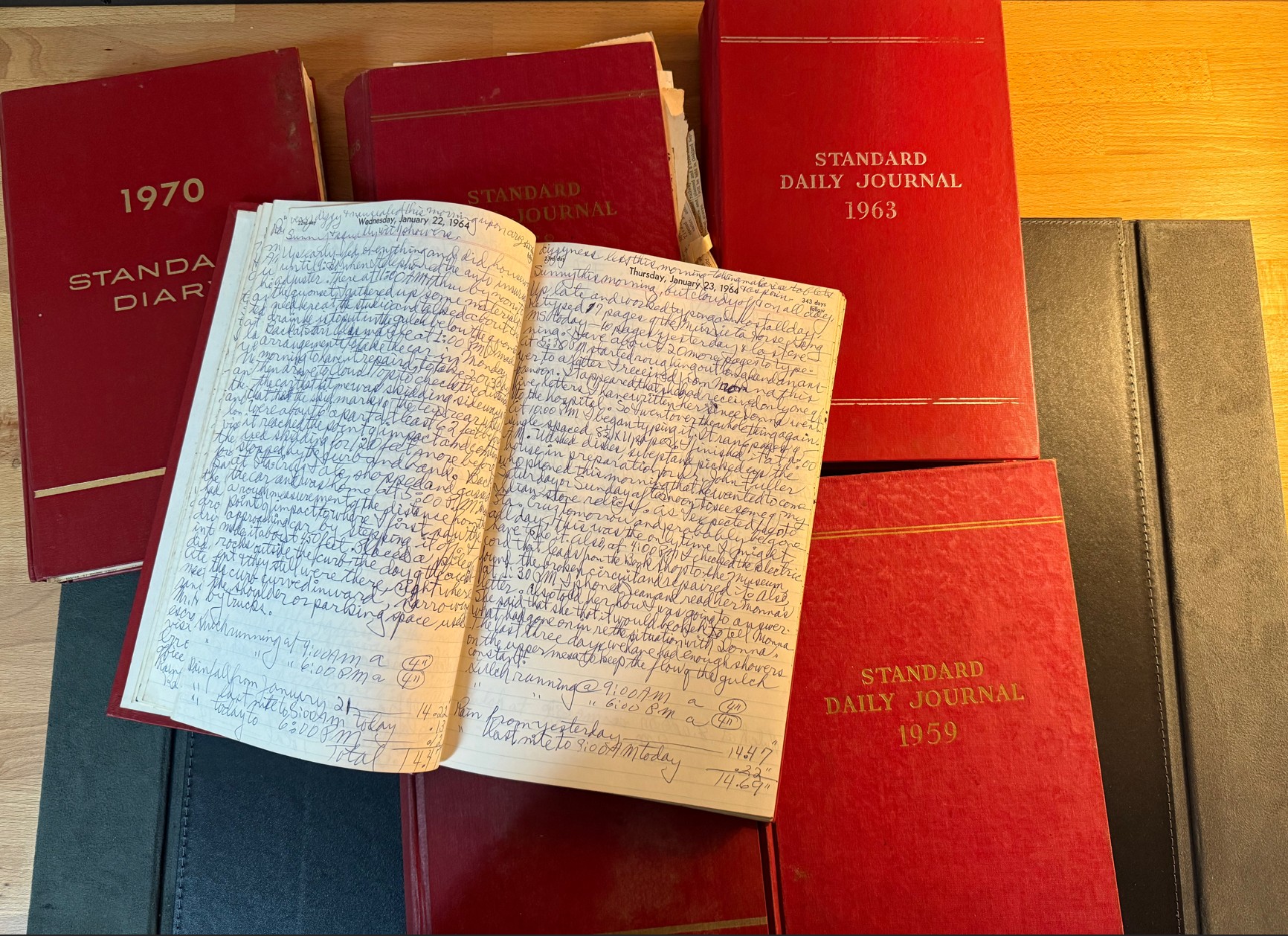 For over 50 years, Frank Latta’s personal journals, describing his daily life and many aspects of his research, sat in a storage unit waiting to be opened again. Through working with Mr. Latta’s grandchildren and great-grandchildren, Phoenix Rumbaugh and Leonardo Ramirez have gained exclusive access to the journals, and have been working on digitizing these books in order to make them accessible to students and researchers throughout academia.
Frank Latta was an influential historian, anthropologist, and writer from the early 20th century who pioneered much of the initial research on California settlers, such as the 49ers. He authored several books, including *Joaquin Marietta and His Horse Gang* and works on the Yokuts of California’s Central Valley. As well as being a researcher, an anthropologist, and a documentarian, he also ran a homemade museum in Pescadero that contained a collection of thousands of artifacts, ranging from pre-contact times, to the early 20th century, spanning several buildings, and consisting of everything from baskets to Ford model A’s. After Frank’s death, much of this material was added to archives and private collections.
Along with the journal work, Phoenix and Leo have tried to learn where much of this physical material that was once housed at the museum now lies.
The Latta Project has been a great opportunity to teach students about the work that goes into archiving physical materials, and to preserving them in different formats. Phoenix and Leo aim to provide practical experience for students in UCSC’s Archaeology Club, so the students can explore various aspects of history and archaeology work. Their goals are to learn about Frank Latta and his research, while also gaining insights into his life through his journals and through interviews with his family. They would like to make the scans of the journals and the results of their additional research accessible to future students and historians, to learn more about the topics that fascinated Mr. Latta, and to expand our knowledge of California history. Through this research they have learned about his use of shipwreck materials, a connection with Joaquin Murrieta’s family, some of his theories about basket design, a deeper understanding of the man himself, and much more.
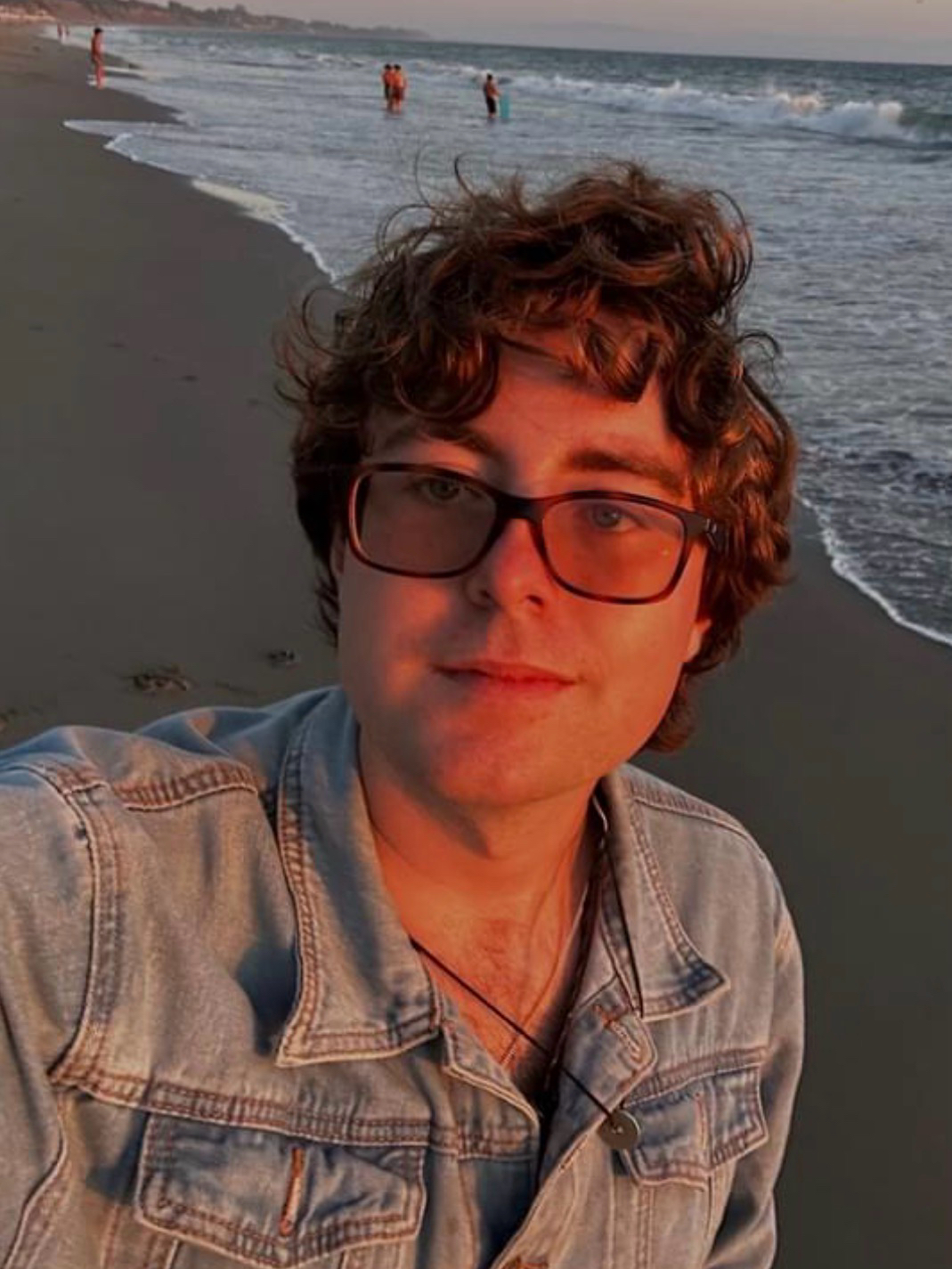 Phoenix Rumbaugh grew up in Santa Cruz County, and has always had a fascination with local history. When in high school, he led local history walks around town for fellow students. That fascination has grown, and he enjoys contributing knowledge to the academic community. Phoenix is the president and co-founder of the Archaeology Club at UC Santa Cruz, where he is a senior, and he is working on his thesis about ancient cattle populations in northern Spain.
He has conducted archaeological research in Spain and in California, he has engaged in archaeological survey and monitoring work, in volunteer activities, and has attend three archaeological field schools, the first through Cabrillo College. The main goal of founding the Archaeology Club was to create a greater connection between students and the fascinating history that brought us here, as well as to help provide students with tangible experiences and to develop skills that they can use later in life, through projects such as working with the Frank Latta digital archive.
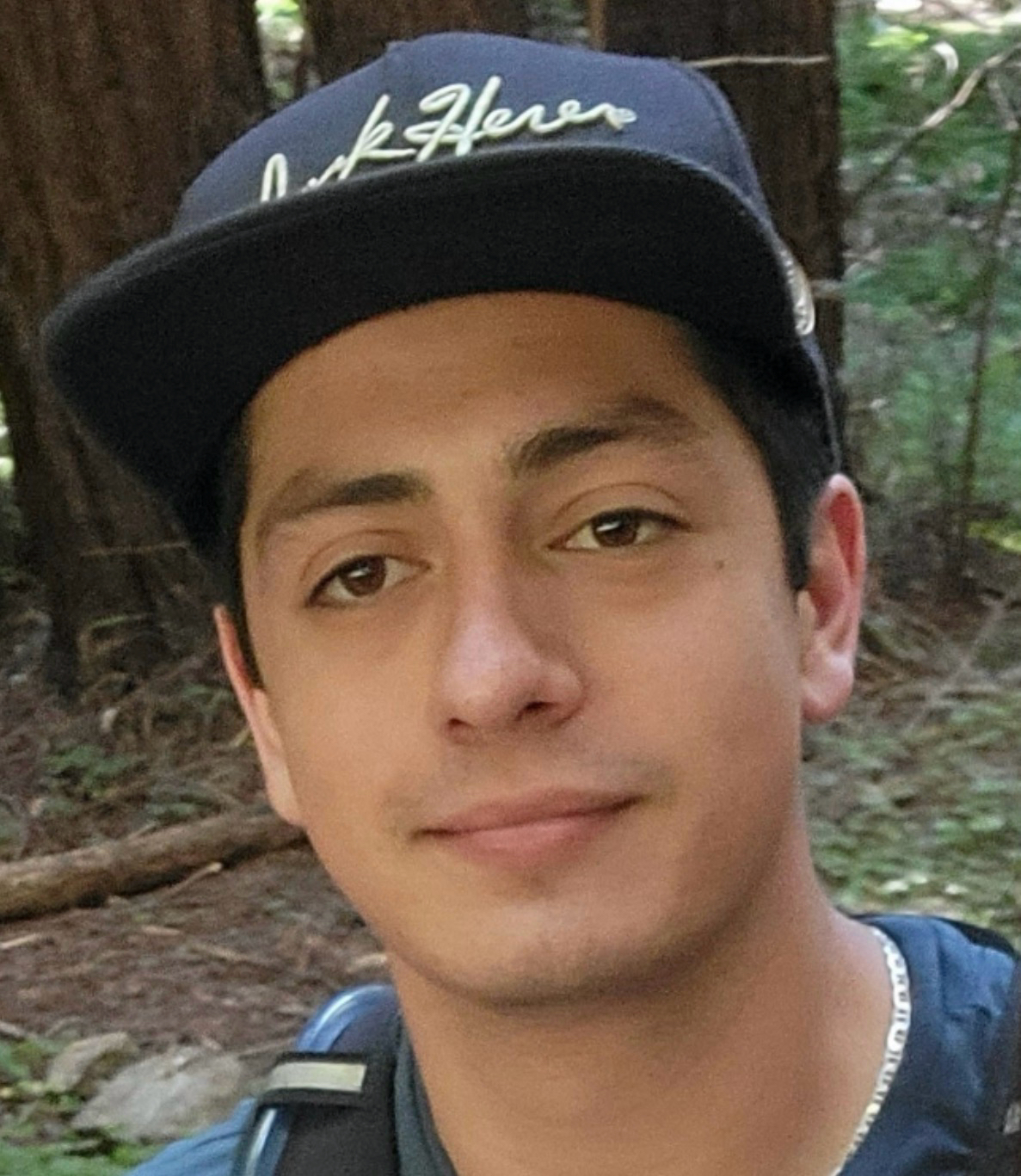 Growing up, Leonardo Ramirez was not interested in going to college or pursuing a specific career. However, that has changed. He is now a third-year student at UCSC, transferring from Cabrillo College, where he joined the Anthropology Club in 2023. After attending field school in 2024, and working with the Esselen Tribe of Monterey County, he has set his sights on a career in archaeology. He is also pursuing a minor in Earth Science with a geology focus, hoping to become a skilled geoarchaeologist, and he is learning new skills, such as using GIS for spatial analysis. Leo is the Vice President and co-founder of the Archaeology Club at the UC Santa Cruz, where he is working to help it become a creative space for students and to facilitate community interactions between students and peers. It is their mission to learn from others and work together.

